2 Nov 2026
Microscopic Symbiosis Networks Driving Mineral Breakdown in Remote Outcrops
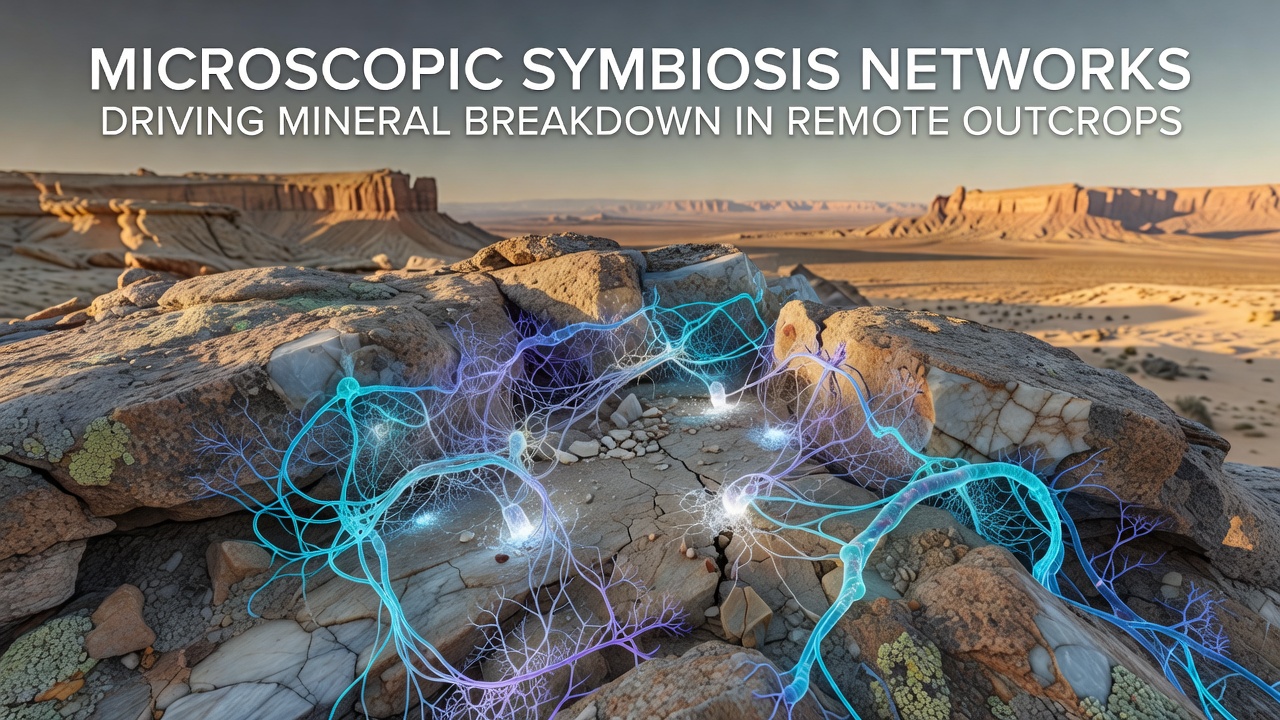
Researchers have documented how microscopic symbiosis networks operate in remote outcrops where fungi, bacteria, and algae form interconnected communities that accelerate mineral breakdown, and these interactions release essential nutrients while altering rock chemistry over time. Studies from high-altitude sites in the Canadian Rockies show that such networks thrive in environments with limited water and extreme temperature swings, yet they persist by exchanging metabolites that support collective weathering activity.
How Symbiotic Partnerships Initiate Mineral Weathering
Observers note that fungi within these networks secrete organic acids which dissolve silicate minerals, while associated bacteria contribute enzymes that target specific metal bonds, and the combined effect produces pits and channels visible under electron microscopy. Data from field samples collected in November 2026 at Arctic outcrops indicate elevated rates of potassium and magnesium release compared to sterile control rocks, confirming the networks' role in nutrient cycling. Experts at the Geological Survey of Canada have tracked similar patterns across multiple sites, revealing consistent correlations between network density and weathering depth.
Algae partners supply carbohydrates through photosynthesis, sustaining the fungal and bacterial components even during prolonged darkness in polar winters, whereas the fungi provide structural protection and moisture retention that allows the entire community to endure desiccation. This mutual support enables sustained acid production that breaks down feldspar and mica into finer particles, a process researchers measure through sequential sampling over several seasons.
Geographic Patterns in Remote Outcrop Colonization
Remote locations such as the Australian outback and Andean plateaus host distinct network compositions shaped by local mineralogy and climate, with surveys from Geoscience Australia documenting higher fungal diversity in siliceous rocks compared to carbonate formations. Those who've mapped these distributions find that elevation and exposure influence network complexity, as higher sites receive more ultraviolet radiation that selects for protective pigment-producing microbes. Yet lower elevation outcrops in the same regions show faster overall breakdown rates because of occasional moisture inputs that activate dormant cells.
Mechanisms of Nutrient Release and Rock Alteration
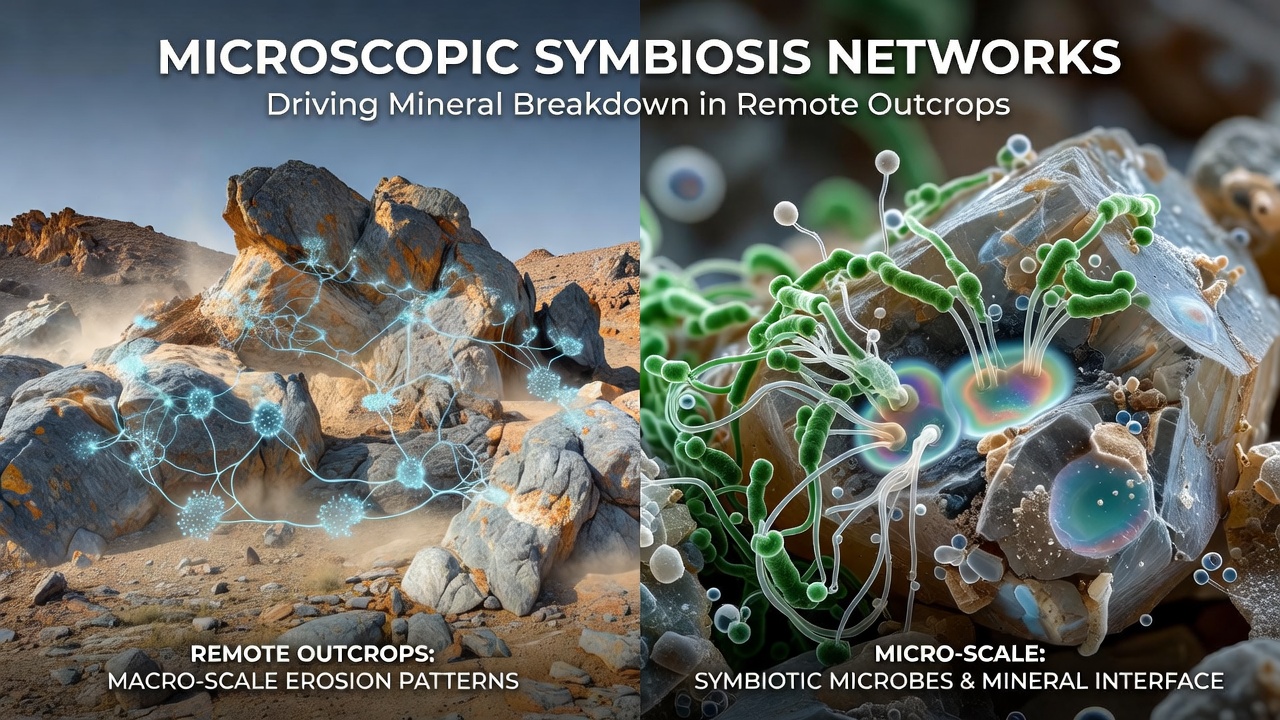
Evidence suggests that chelating compounds produced by symbiotic bacteria bind iron and aluminum ions, preventing re-precipitation and allowing continued mineral dissolution, while fungal hyphae physically penetrate fractures to expand surface area for chemical attack. According to findings published by the University of Alberta's Earth and Atmospheric Sciences department, these combined actions increase porosity by up to thirty percent within five years under controlled conditions that mimic remote outcrop environments. The resulting mineral fragments become substrates for further colonization, creating feedback loops that accelerate landscape evolution.
Researchers continue to analyze isotopic signatures in weathered material to quantify the contribution of biological versus physical processes, and results from multiple expeditions confirm that symbiosis networks account for the majority of initial breakdown in biologically active zones. What's interesting is how seasonal thaws in November 2026 triggered measurable spikes in acid production across monitored sites, linking network activity directly to temperature-driven metabolic changes.
Interactions with Larger Ecological Systems
Mineral particles released by these networks contribute to soil formation in surrounding areas, supporting sparse vegetation that in turn provides organic matter back to the microbial communities, and this exchange connects outcrop weathering to broader nutrient flows. Data collected by the Antarctic Research Program in Australia demonstrate that outcrops near penguin colonies exhibit enhanced network activity due to nitrogen inputs, illustrating how distant biological sources influence remote rock surfaces.
Those studying long-term landscape change note that repeated cycles of colonization and mineral release gradually reduce outcrop stability, leading to increased fragmentation during freeze-thaw events, although the networks themselves benefit from the new surfaces created by each fracture. This dynamic maintains a balance where biological activity shapes physical terrain while physical changes create opportunities for expanded symbiosis.
Conclusion
Comprehensive monitoring programs now integrate genetic sequencing with geochemical assays to map symbiosis network distribution and function across remote outcrops worldwide, providing baseline data for future comparisons. Research indicates that these microscopic communities represent a significant driver of mineral transformation, with implications for understanding nutrient availability in extreme environments and the early stages of soil development. Continued observation through 2026 and beyond will refine models that link microbial activity to geological processes at scales ranging from individual mineral grains to entire mountain ranges.